
Photography After the Shoot: Lola Graham on Image Selection and Material Traces
Why a blurred image can be more precise than a sharp one, why an image is printed before it is scanned, and when intervention becomes decoration.
Lola Graham prints digital photographs, then scans them again. Sometimes that is enough; in other works, she draws on the print with a marker, burns through the paper or photographs the altered image again. The decision depends on what each work calls for.
The artist describes her practice as "unstable equilibrium". This principle runs through "Axis" and "Severance", the landscapes presented at FOR YOUR HOME, as well as her staged photographs, sequences of actions and videos. We spoke about choosing an image, the effort of holding a pose and the point beyond which an explanation can get in the way of an image.
Unstable equilibrium
— You describe your practice as "unstable equilibrium". What are the forces being balanced?
— Control and chance, the abstract and the concrete, moments that happen between other moments. All of this is fleeting and barely perceptible, and holding on to it is a pursuit in itself, one that will not let me go.
I work through deconstruction and narrowing things down: I remove what is unnecessary until I reach the essence of an image. Yet that essence is never fixed; it changes with every look.
The main question in my work is "why". Why this colour? Why this model? Why this subject? Why this broken egg that I accidentally dropped and, for some reason, started photographing? If I have an answer, things are more or less on track.
The viewer, meanwhile, owes me nothing: they can come up with their own answer, choose not to look for one, or simply look and move on. If the work leaves a question behind, it has done its job.
Axis and Severance
— How does this equilibrium work in "Axis" and "Severance"?
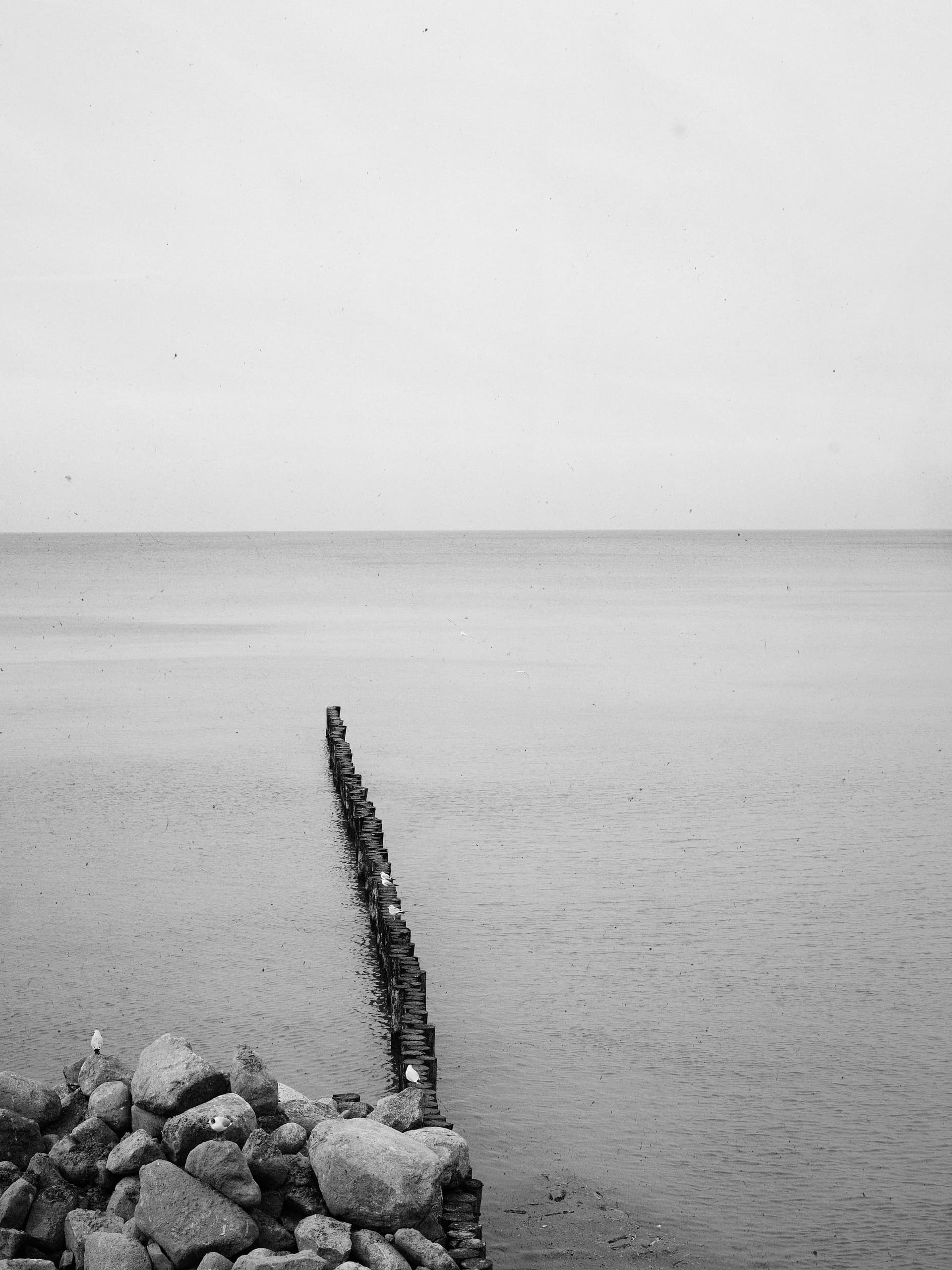
— In "Axis", the dominant compositional line both unsettles and maintains balance. This axis of wooden groynes divides the uniform haze of the water's surface and the horizon, yet it also draws the viewer's gaze and attention into the distance, offering a path.
A path means movement, and movement is the essence of life. Intruding on nature's stillness, this axis connects it with human nature.
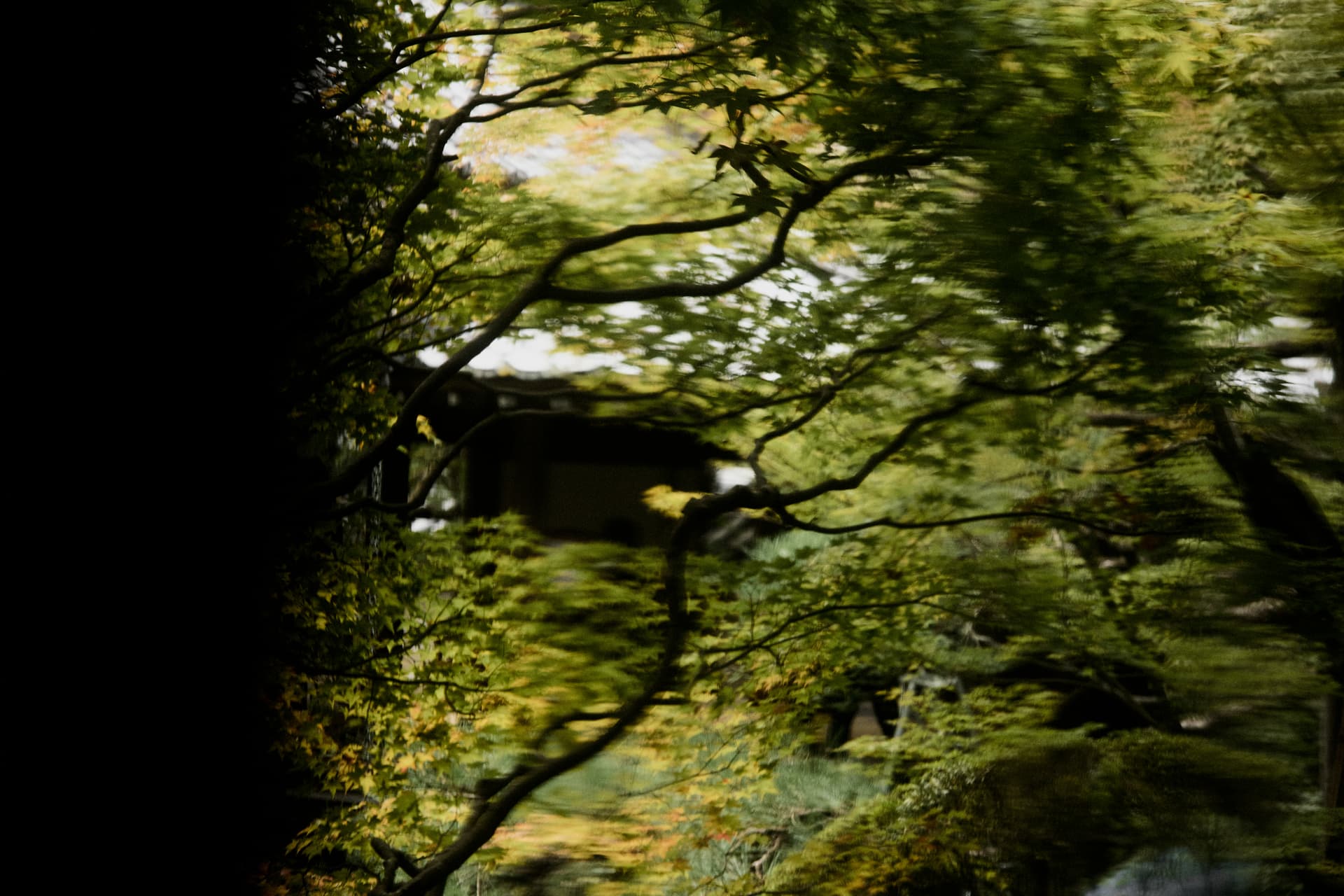
In "Severance", unstable equilibrium emerges for me through the distortion in the glass. It reveals the human brain's need to interpret, alter and perceive the reality around it.
The search for equilibrium here lies in how we choose to look at the world, how we respond to what happens, and the panes of glass and filters through which our actions, decisions and emotions pass.
The material stage
— When making "Axis" and "Severance", you printed the photographs at an intermediate stage and scanned them again. What did that stage contribute?
— I would actually say it worked through subtraction. The printer and scanner brought their own characteristics: they softened the digital quality of the images, added grain and created depth through crushed blacks.
But what matters most to me is the philosophical aspect: I feel the photograph with my fingers and scan it again, now leaving a trace of my presence, even if it is not clearly visible.
In "Axis" and "Severance", I made a conscious decision to stop there. Printing and scanning gave them tactility, presence and a sense of immersion in a place. There was no need for further layers: the photographs themselves contained enough.
This is an example of deliberate restraint: minimal intervention for maximum effect.
Choosing an image
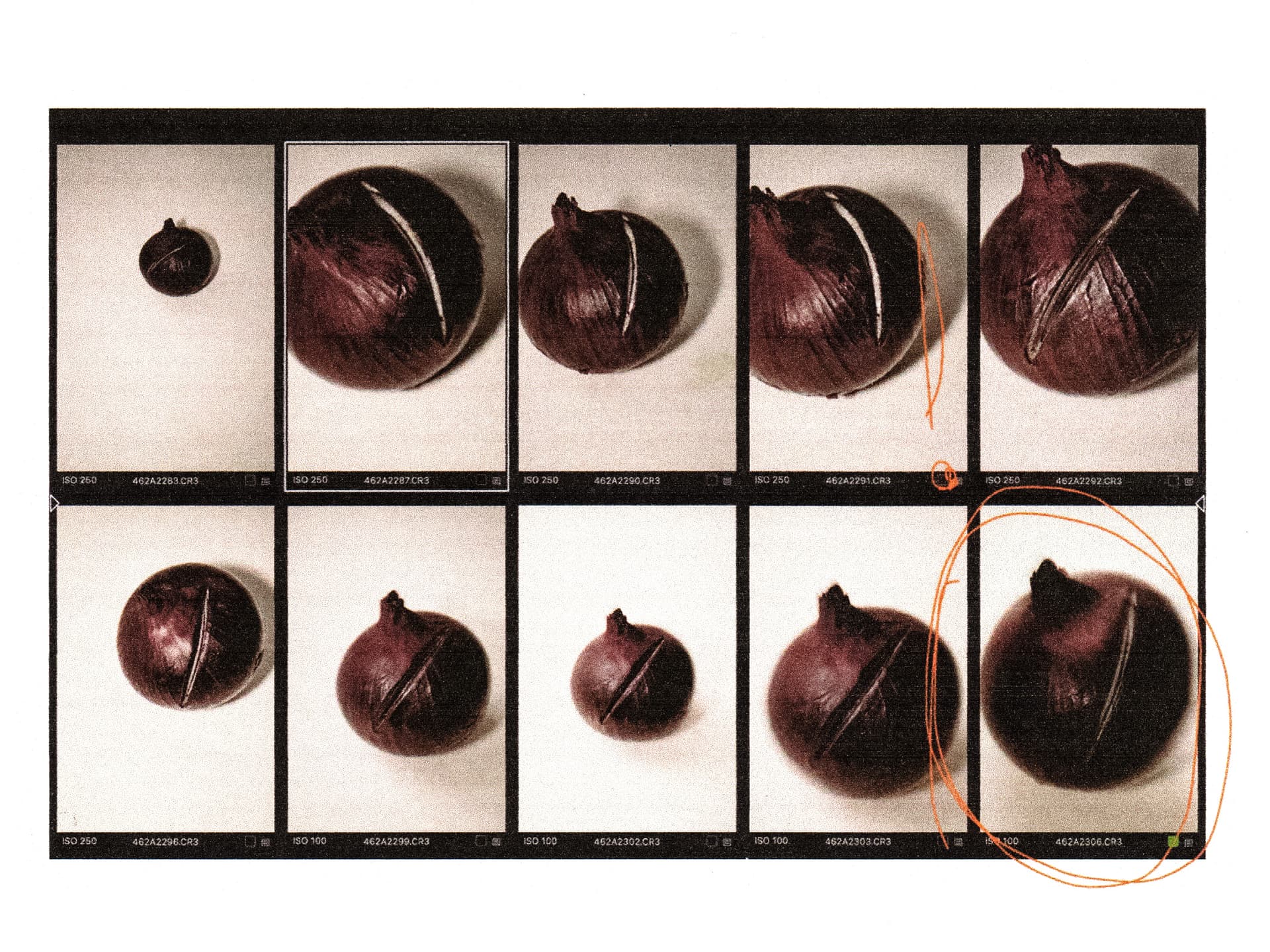
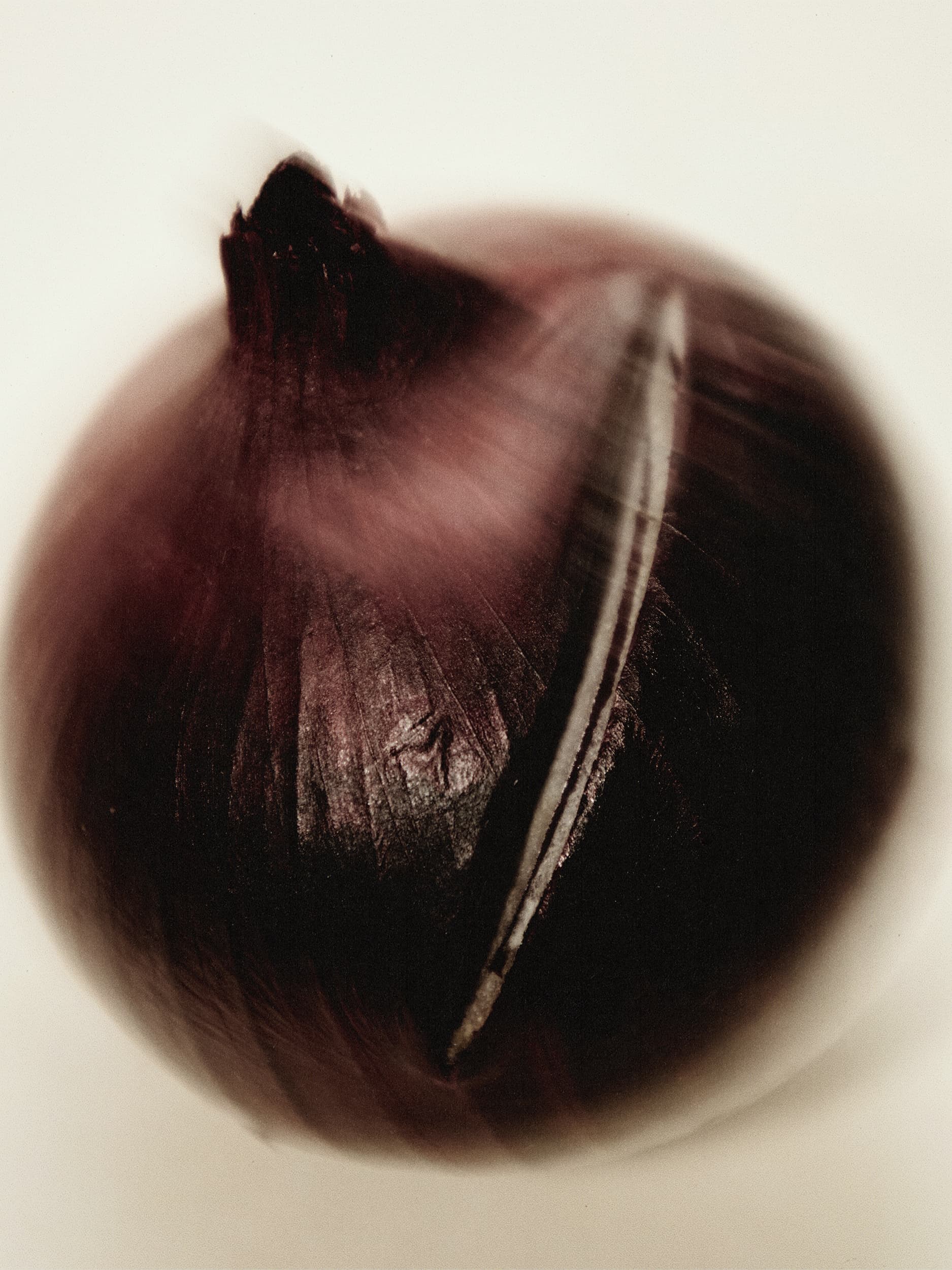
— In the material documenting your selection process, you show several similar images of a cut and choose a more blurred one. What made you settle on that particular image?
— To me, that blur breathes. When choosing images, I try to follow the feeling that comes in the very first second. It usually stays the same afterwards.
The shape of the cut itself, the way the on-camera flash lit it, the way the shift happened… Yes, there are other similar images, but this particular one made me hold my breath and physically feel the cut.
On the first pass, I quickly scroll through the images straight after the shoot, but I do not remove anything. I just look closely and take note of what held my attention for longer.
Sometimes I already have the final image I want in mind, and then I find it among the takes fairly quickly. But when everything takes shape in the flow of the process, choosing can take a very long time. And that time is spent in my head, rather than at the computer.
I try to commit the images to memory and carry them around with me, recall them, imagine them as part of the whole, and return to them after a while: a couple of days, a few weeks, a few months. It varies every time.
Ultimately, I aim to trust myself to choose the image that will speak more powerfully than any explanation or interpretation. And do so without me standing beside the work.
I cannot recall printing ever changing my choice. It may have made me think a little longer, but for me it comes after the final selection.
unbirthday
— In your description of "Unbirthday", you talk about dreams in which you see yourself pregnant. In one of them, you peel an egg and discover three yolks inside. How did this image become part of your work?
— The initial impulse came from reflecting on my own role and body, on playing out and rehearsing a scenario.
In one of those dreams, I was peeling an egg and found three yolks inside. Since then, whenever I peel eggs, somewhere in the back of my mind there is the thought that one day I will find an answer where there is none. Fortune-telling is a game you begin to take too seriously.
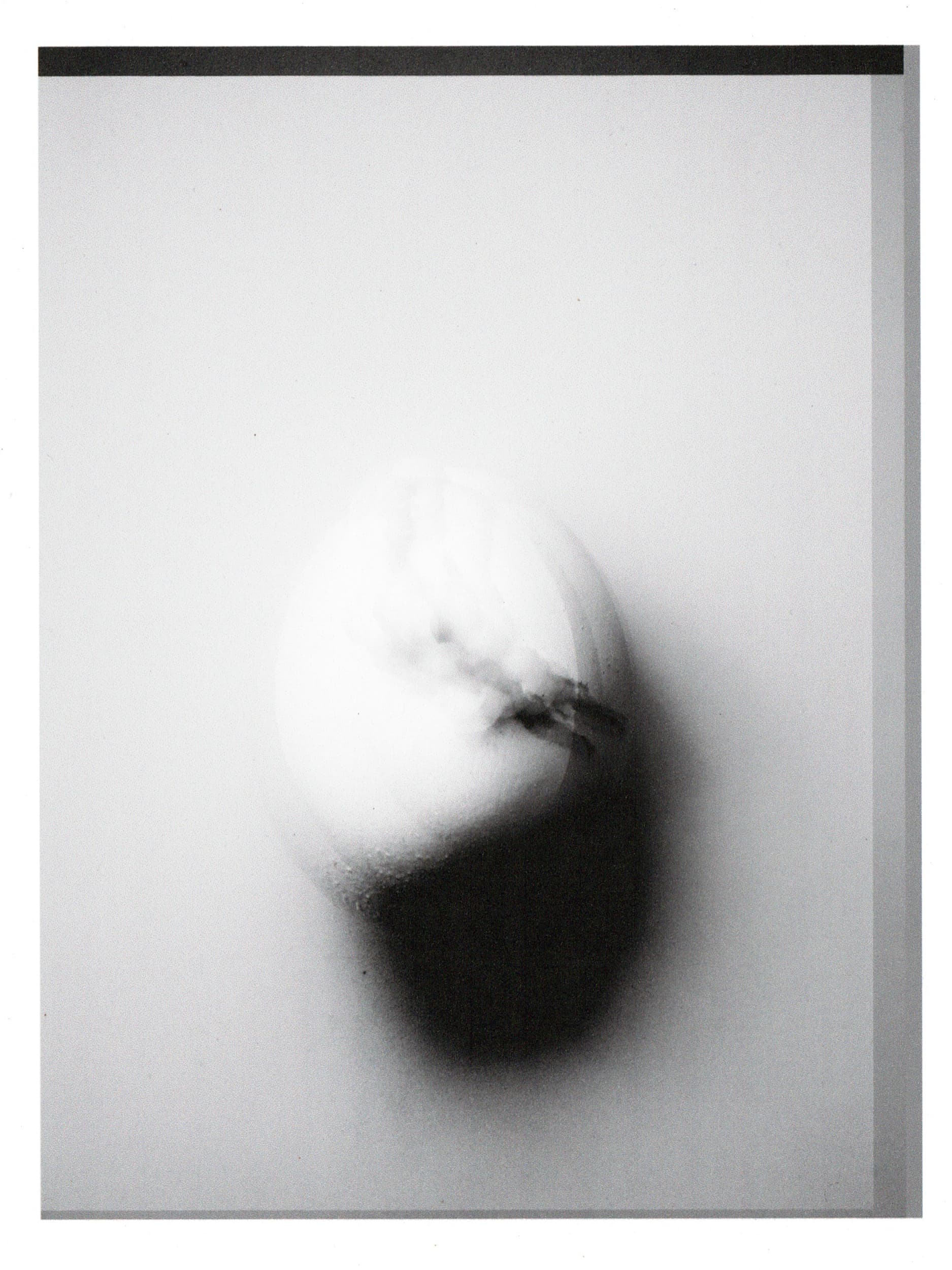
The series is built on multiplication, repetition and distortion. In one of the works, the final image consists of three photographs layered one over another in sequence. This creates a shift while keeping the form recognisable.
Unstable equilibrium is expressed here in how difficult it is to bring an egg into any single state of balance. You can achieve it and lose it even faster: an instantaneous, irreversible change, a transition, an emergence from the shell.
Repetition and the empty cell
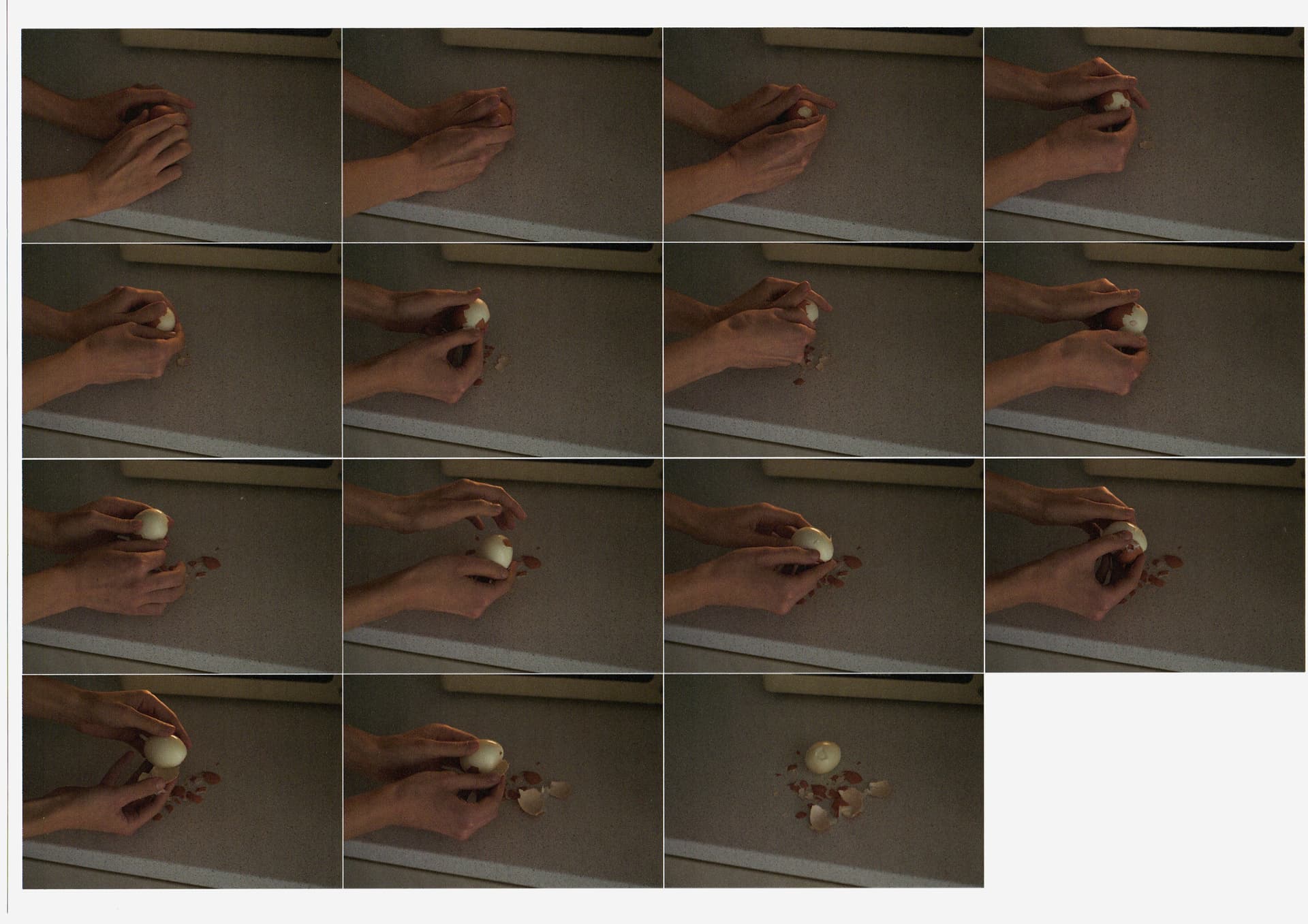
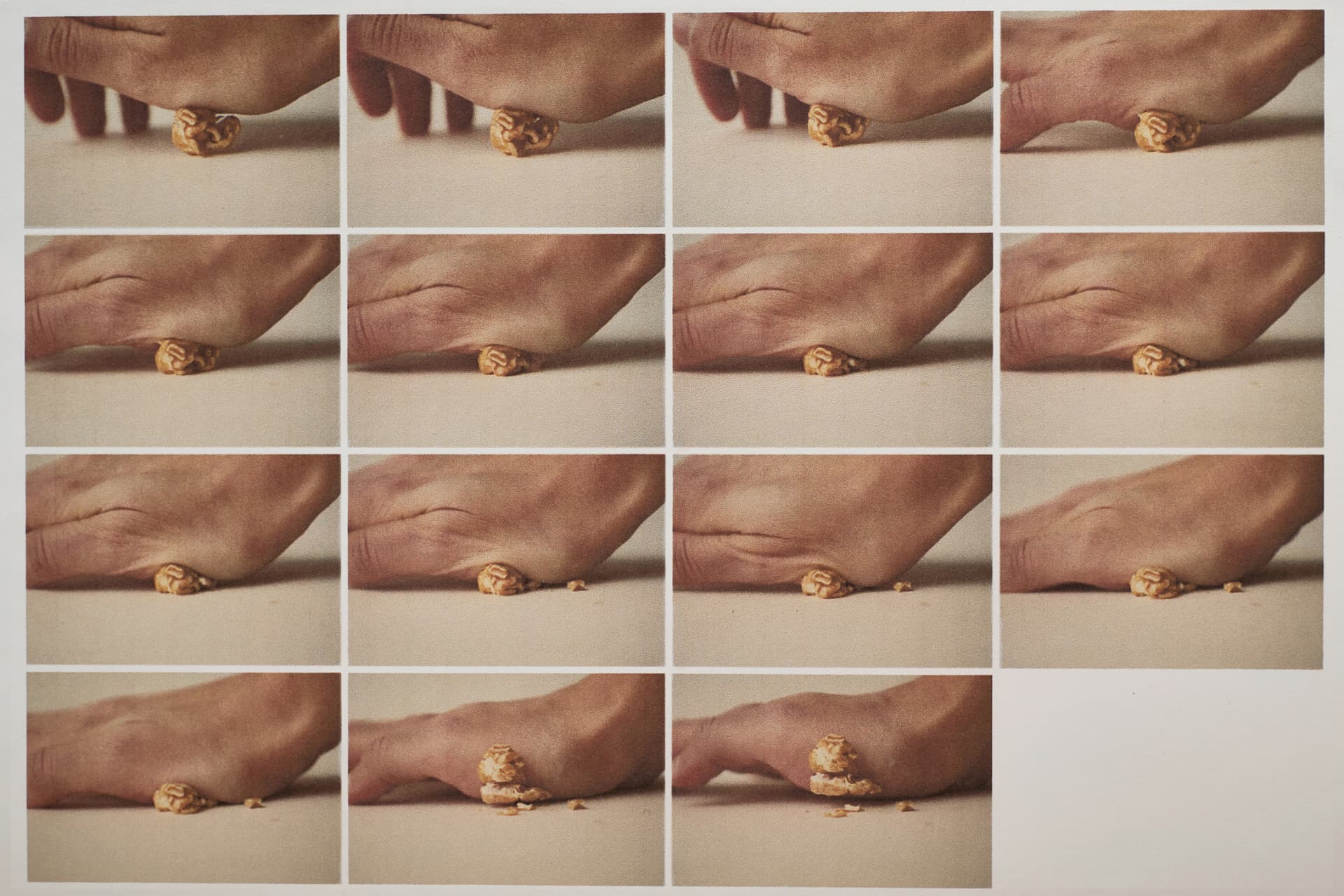
— There are two sequences in the series: hands peeling an egg and a hand squeezing a popcorn kernel. Each grid contains fifteen photographs and an empty sixteenth cell. Why did you choose this form?
— The main aim was for the grid to convey a sense of process, a change in form. Why fifteen? There is no secret meaning, to be honest.
The empty cell invites the viewer to imagine the last image, the ending. Or perhaps, instead, to leave it as it is and heighten that sense of emptiness after all the intensity of the grid.
But these grids are works in their own right, rather than intermediate stages.
an exhausted moment of raw honesty
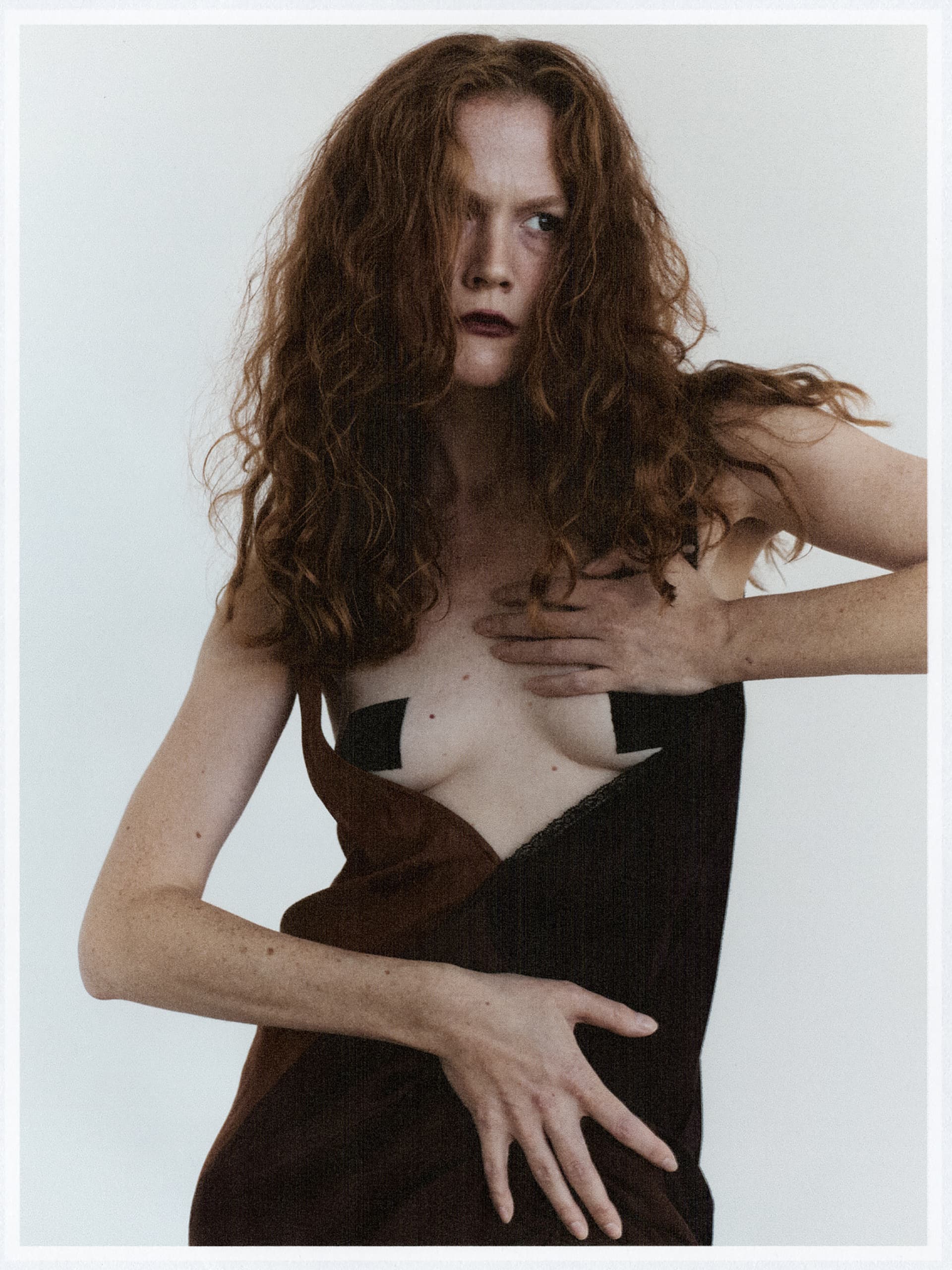
— In "An exhausted moment of raw honesty", the model's body is in a pose that is difficult to hold. How did you create that state?
— I directed the movements and body positions. Just before the shoot, I used a mirror to work out all the poses I wanted to see. During the shoot itself, I literally repeated them and directed the model using myself as a reference.
Of course, her own feeling was part of it too. It matters to me how she experiences working with me and with the concept. But I think it comes through more strongly in the way her emotions unfold.
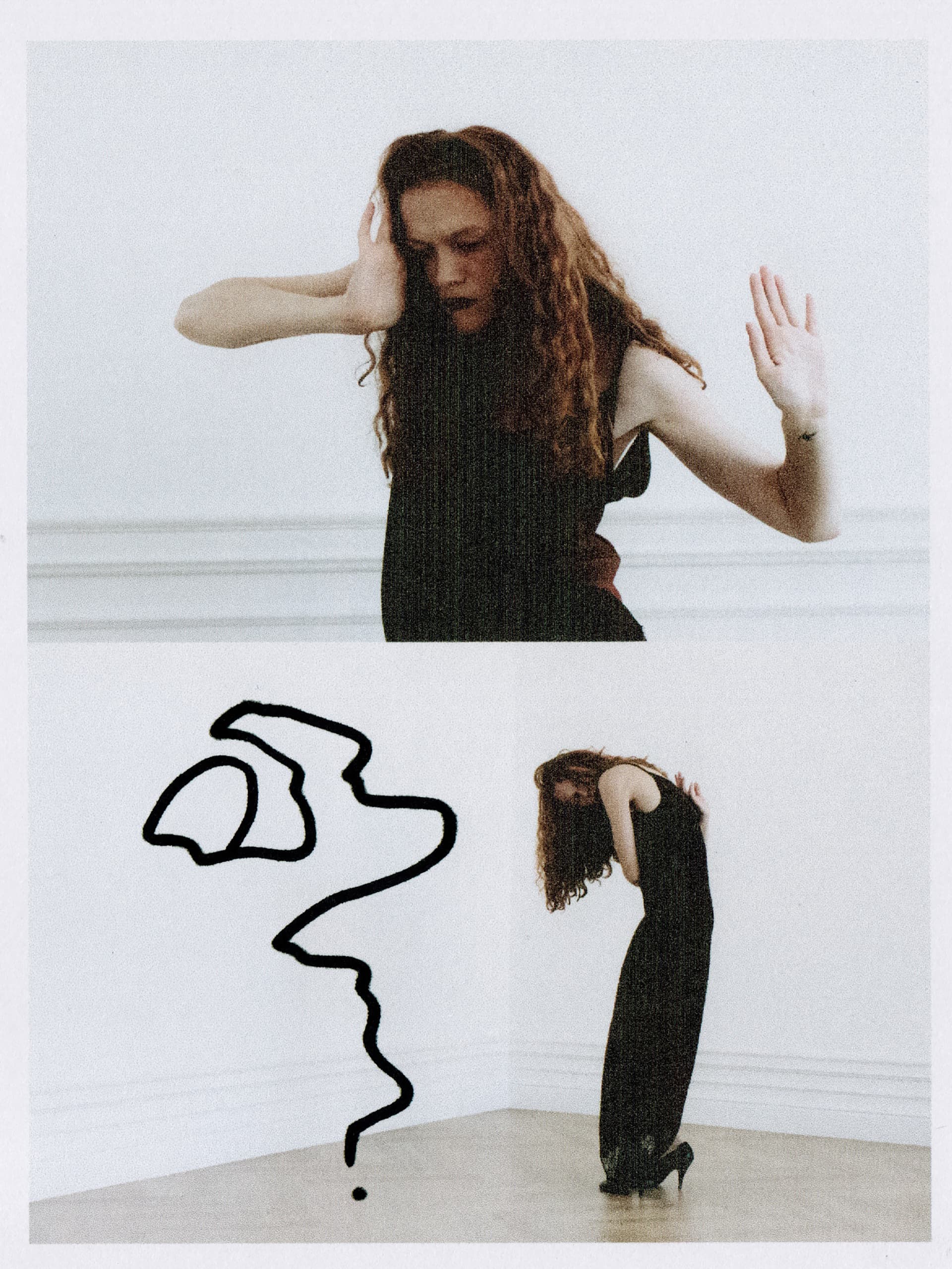
Seeking poses and states at the threshold of mounting discomfort, when you can barely hold the position any longer, is one of the themes I try to convey through photography. It probably comes from my background in dance: these are precisely the positions I seek in my own dance practice too.
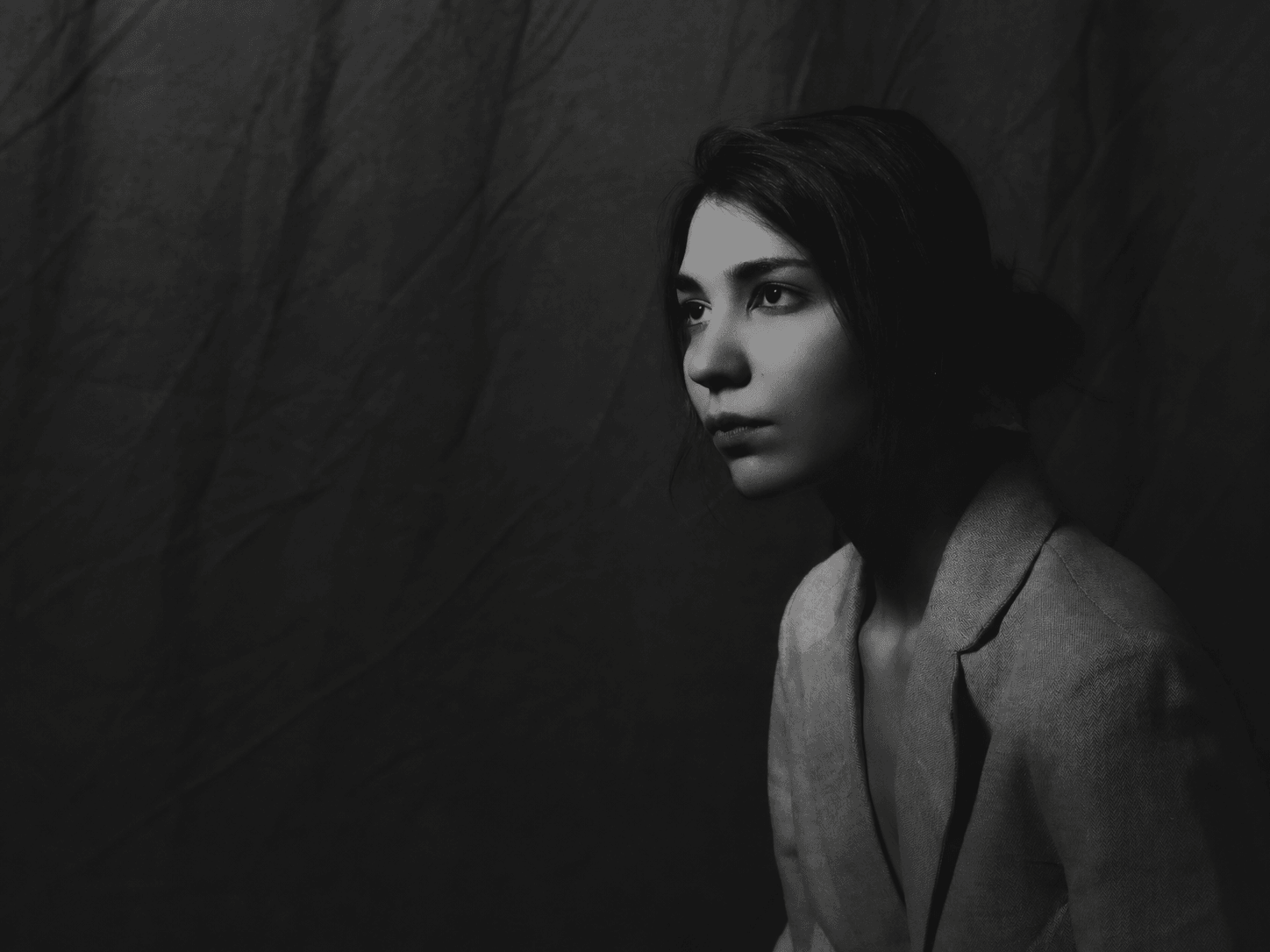
In one of the images, the body and pose hold the form together, expressing and asserting the woman's presence in the space. What shifts that form is her gaze, directed off to the side. Is she deliberately keeping us out of her thoughts, or is she simply that indifferent to the viewer's presence? What or whom does she see beyond the frame?
The marker line
— A black line appears in some of the works in this series. How was it made?
— The black lines were physically drawn with a marker. I worked them out digitally beforehand, but printed the images without them, drew over the prints with a marker and then scanned them that way.
Graceful Exit
— You describe "Graceful Exit" as an ongoing investigation. Could you walk us through "Hrust" (2026), from the original photograph to the final result?
— "Graceful Exit" is the name I give to the research that led to my method. It made me remember why I do photography at all and why it is important to remain curious, about both the new and the forgotten.
It is an ongoing investigation, my own search.
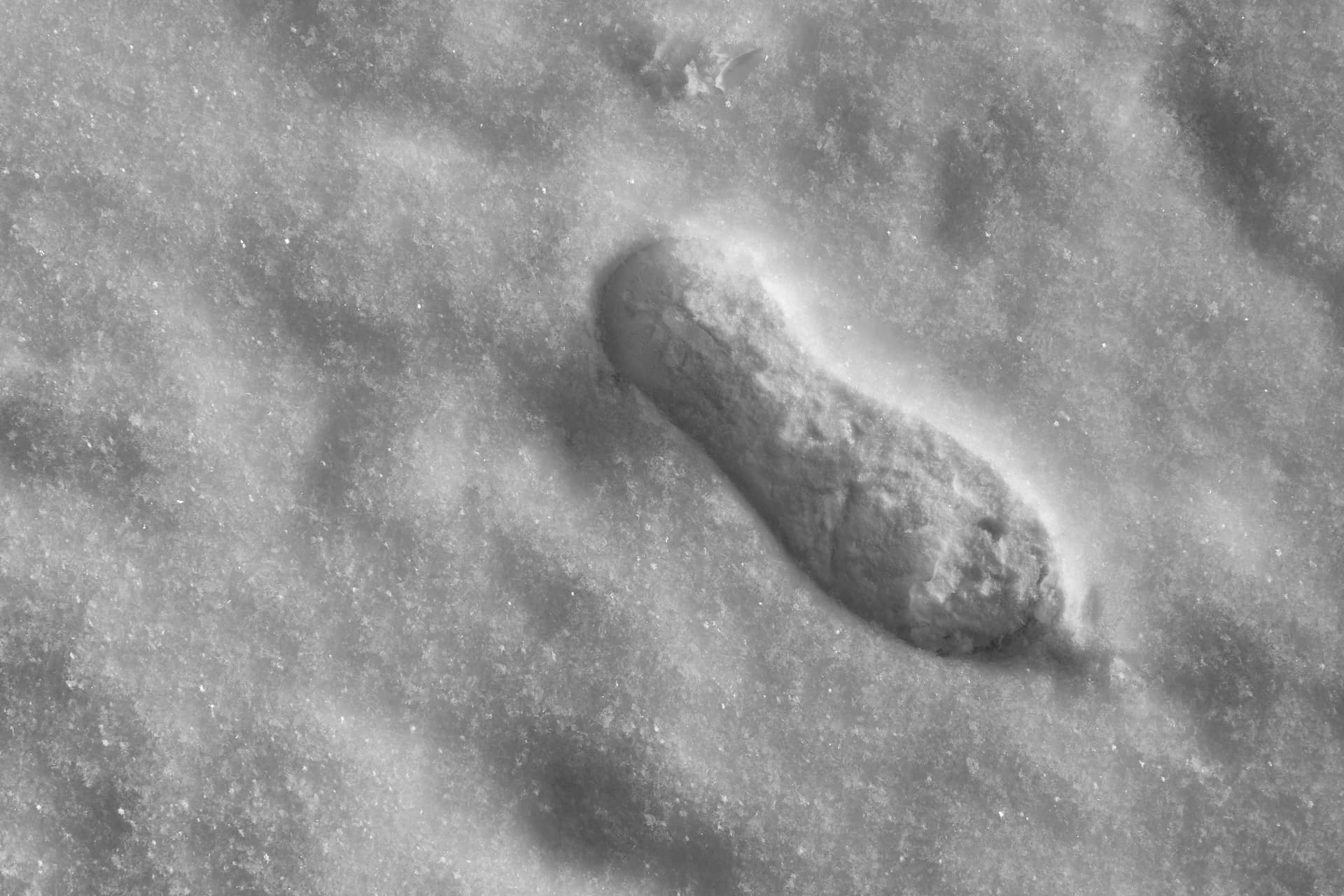
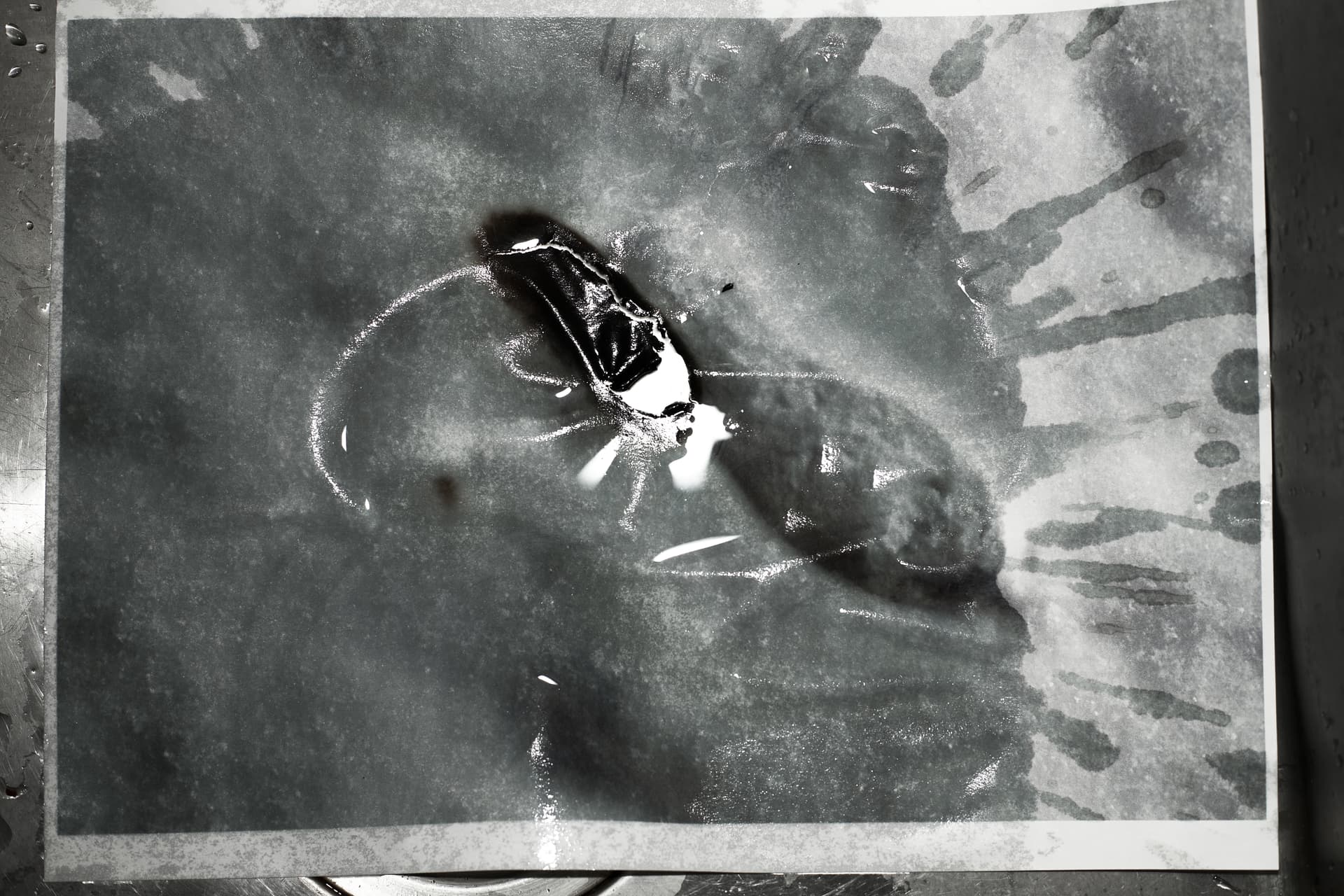
One of the works began with a footprint in the snow. I wanted to make something from it and decided to burn through the photograph where the footprint was.
I printed the photograph and began setting it alight with a match. But when I felt the flame was becoming a little less controllable than I wanted, I hurriedly held the photograph under a running tap.
And I liked the look of the wet, burnt edges of the paper so much that I decided to photograph it in that raw state, right there in the sink, using direct on-camera flash.
That was where the work ended. The final result is a digital photograph of a printed and altered digital photograph. It had come full circle.
I also like the way the water on the wet print and the snow within the image come together here.
The limits of the material
— How do you know when it is time to stop intervening?
— I reach the limit when I can no longer see the purpose of a technique and it becomes mere decoration.
In a lecture, I compared creative practice to a cell. In my case, the nucleus is unstable equilibrium, while techniques, explorations, experiments and repetitions are the structures that support it. Without the nucleus, everything becomes a mere technical possibility, serving only a function.
But there have certainly been times when I crossed the line. Perhaps I did not fully understand what I wanted the result to be. Or I was simply exploring and letting myself try things to get past the barrier of the blank page.
For example, with one image in "unbirthday", I wanted to introduce materiality after printing by adding eggshell. But later it seemed too naive and literal. In the end, the image that went into the project was printed and scanned. The intervention happened during printing: the printer produced streaks, which I decided to keep.
And I poured glass cleaner over one image from "carne". I got a result, but afterwards I could not understand or articulate why I had needed to do it.
Usually, at moments like that, I put the experiments away in my "collection of curiosities", as a reminder that I can try them again next time, with a different material.
Blind Spot
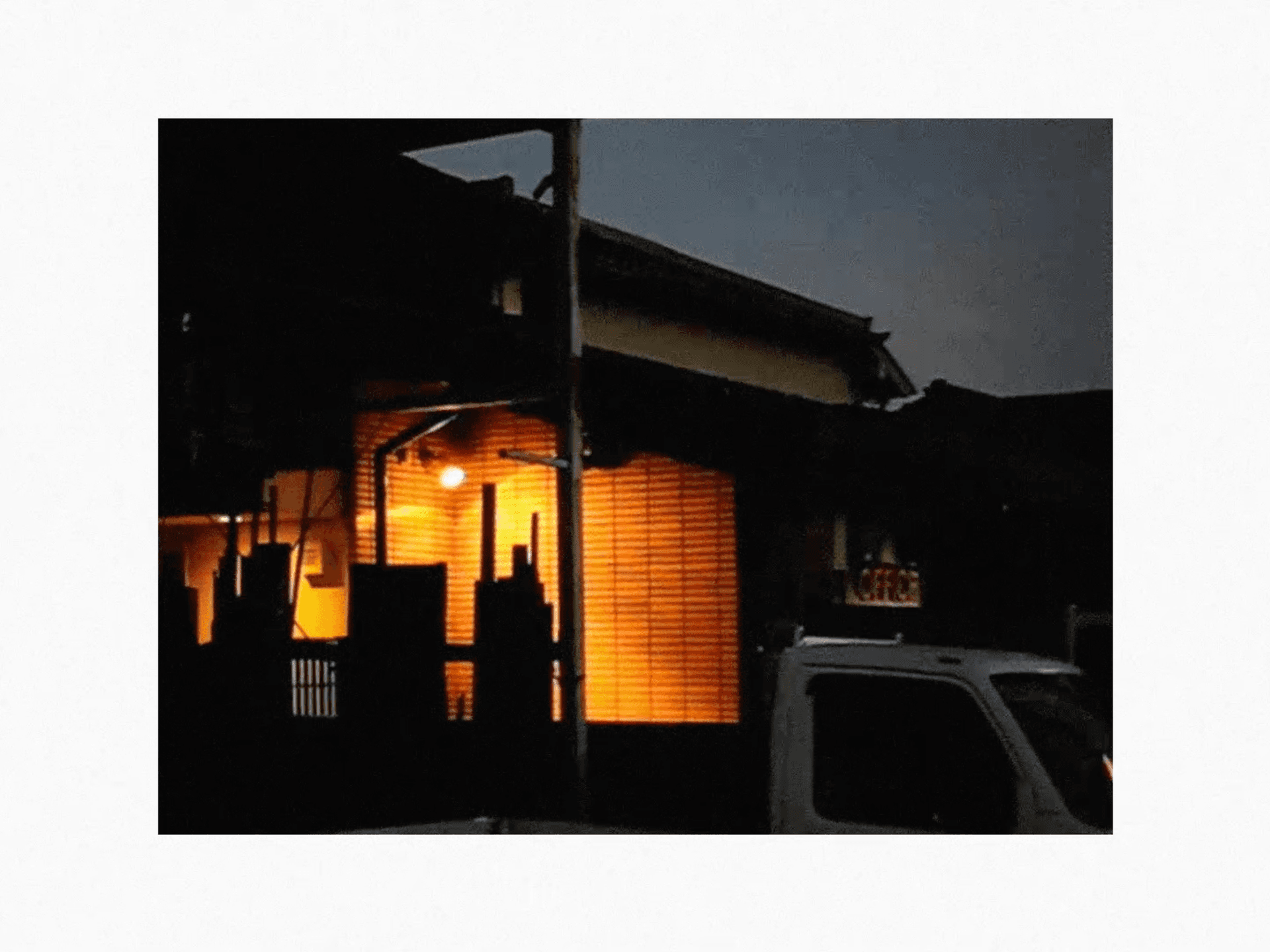
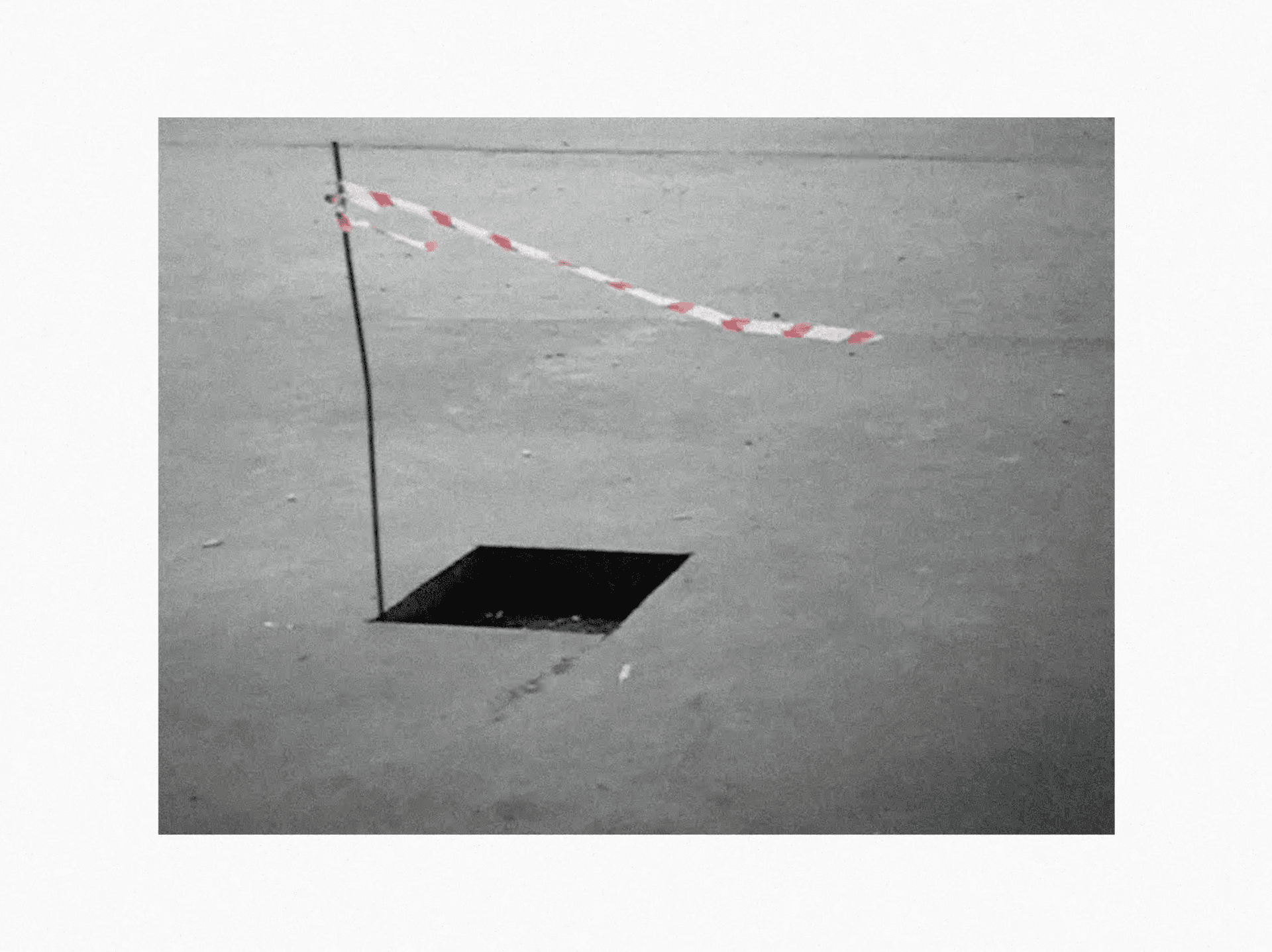
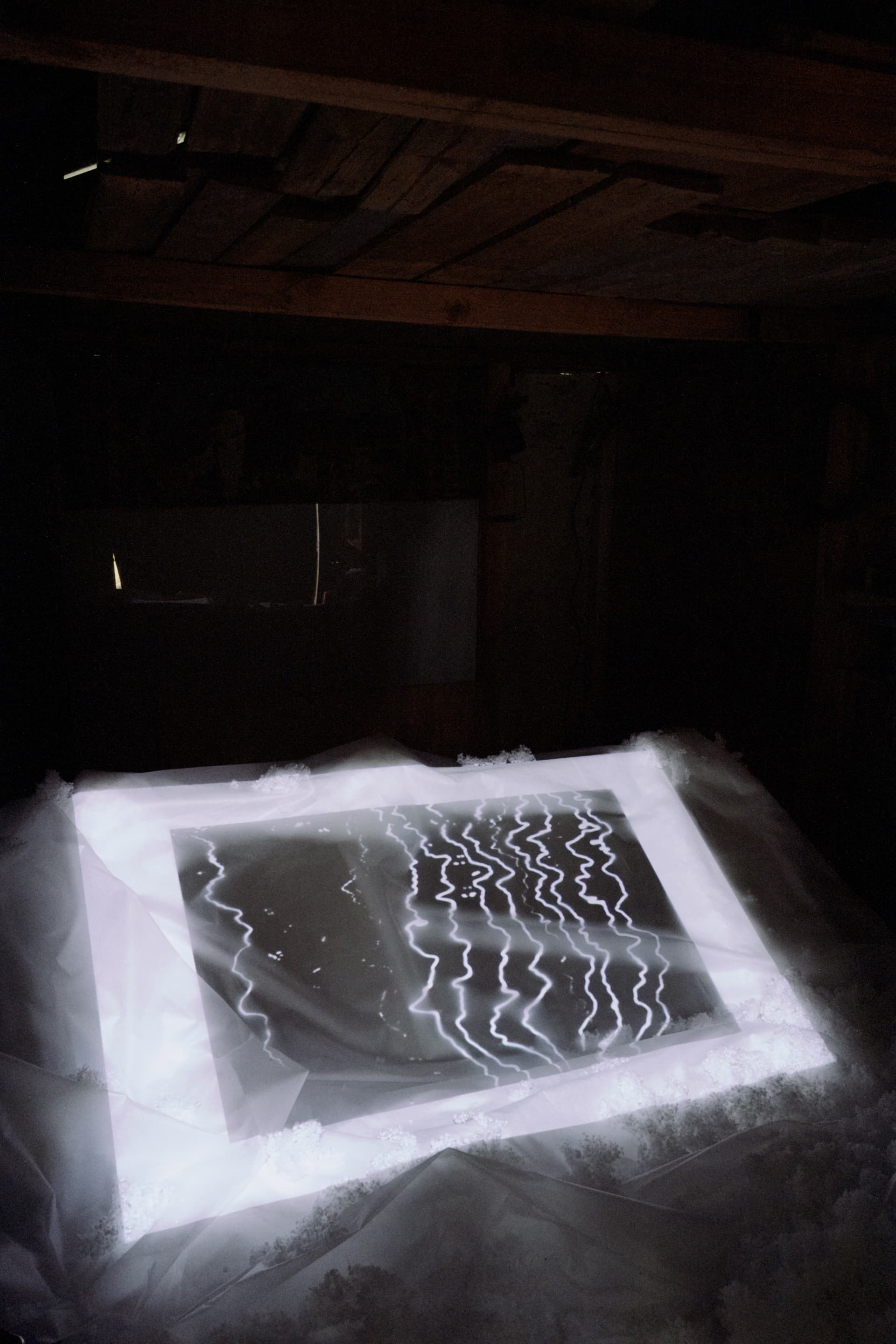
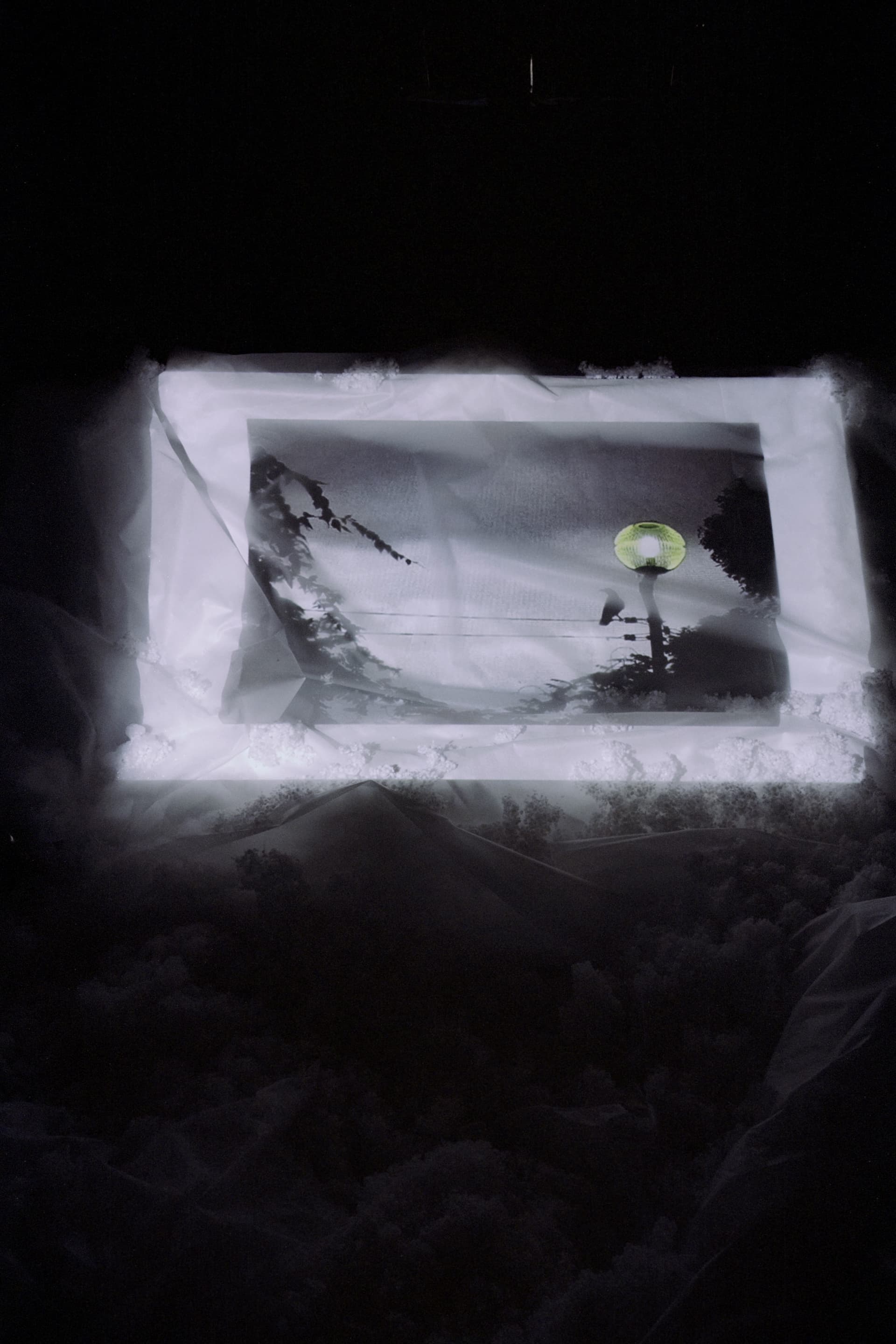
— How did "Blind Spot" come about, and why did you decide to rephotograph the original image from a monitor using an old digital camera?
— The project was built around a theme set by the gallery and the festival. The work became part of the exhibition programme at Archstoyanie 2026, under the theme "Marshrut perestroen". I was invited to contribute a video artwork, and that is how the final project took shape.
But it actually began with my personal collection of video fragments under the working title "don't blink". It is a collection of videos in which light blinks rhythmically.
The image of a lamp functioning as a sign seemed a logical fit for the theme; I simply decided to broaden it a little. All the material came together quite easily from my archives, because I see myself as constantly on a journey, shaping its course, and I pay attention to events connected with that.
In "Blind Spot", the repetition of an action and the time of day hold the form together, while sound shifts it. I wanted to create an arc: a gradual build in intensity, an abrupt release, a new cycle.
The decision to rephotograph it comes from my constant desire to add another layer and deepen perception. Today, everything is so easy to access and read on a phone screen that I enjoy finding something in my research that makes you frown in puzzlement.
We expect a road sign to explain something and a light source to show the way. But we are the ones who have assigned those meanings to them.
When we follow a sign or a light, we expect it to lead us to point B, the ending we want. Yet perhaps it leads us to point A, precisely to illuminate where we are now and what state we are in. Only then is it possible to move on.
Talking about the work
— At what point is a work finished for you? And how easy is it to talk about the process that led to it?
— A work is finished when it brings itself to an end, however that may sound. But I really do try to follow my intuition here and rely on what I feel.
I am still working out how I feel about showing the process. I enjoy talking about it, because conversations very often help me find answers for myself.
But there is another question: does explaining every stage in too much detail undermine the work itself? It is a little like a magician explaining how a trick works: yes, it is interesting, but is it still interesting to watch the trick afterwards?
There probably needs to be a line somewhere. When sharing my experience, I would rather offer guidance than give instructions.
Before the lecture, I had to have a serious talk with myself and recognise that what I was sharing really mattered. I needed to explain in words what I do and why. The main aim was to find a way of putting into words something I do very intuitively, guided by my own beliefs, views and tastes, so that it would make sense to someone encountering me for the first time.
And that is great; it is a form of growth too. At the same time, I am looking for a balance between letting the work speak for itself and speaking about it myself.
I see my path in photography as making images that stay with the viewer and leave an imprint on their mind. So that someone can discover something for themselves, without context, without a title, without knowing where or when the photograph was taken, and without a carefully composed description.
Works by Lola Graham at FOR YOUR HOME
FOR YOUR HOME presents Lola Graham's works "Axis", 2023 and "Severance", 2025. The artist's process includes intermediate printing and rescanning. The gallery produces the final prints on Hahnemühle paper. Specifications and purchase details are available on the individual artwork pages.